
RK Narayan's Death Anniversary: Malgudi Days and the Magic of Simpler Times
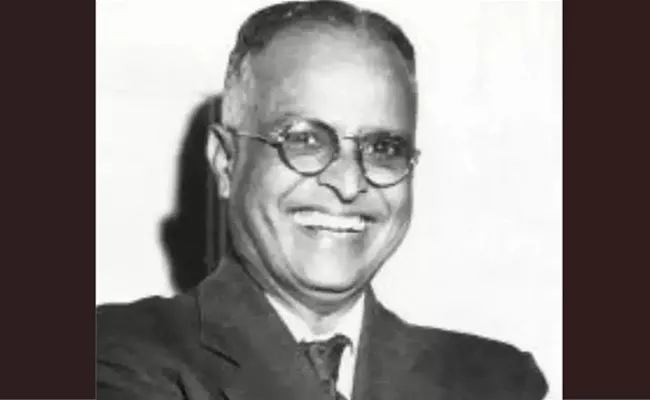
Today, we honor one of India's finest writers, R.K. Narayan, whose works gave us Malgudi, a fictional town that seemed more authentic than many modern cities. The ethos of an India that is now only discernible in faded recollections and yellowed pages was caught by Narayan through his profound simplicity and gentle wit.
Rasipuram Krishnaswami Iyer Narayanaswami, who was born in 1906, was more than just a novelist; he was a chronicler of the Indian middle class, capturing their lives in the rhythm of daily life rather than with drama or spectacle. Neither heroes nor revolutionaries characterized his characters. They were regular men and women: a grandma with ageless wisdom, a seller with aspirations greater than his stall, and a schoolboy having trouble with math. However, something special was hidden within their ordinariness.
A Portrait of India's Soul: Malgudi Days
Malgudi, maybe Narayan's most famous creation, was more than just a made-up town. It was charming, chaotic, and incredibly human—a microcosm of India. From Swami and Friends to The Vendor of Sweets, the stories that took place there reverberated with tenderness and subdued realities. Instead of shouting, they were attempting to subtly convey a fundamental aspect of our identity.
For many people in the 1980s and 1990s, watching Malgudi Days on Doordarshan, which was adapted by director Shankar Nag and actor Master Manjunath, was a daily routine. A sort of ache is still evoked by the eerily nostalgic theme music, a yearning for a time when people wrote letters, played gilli-danda, and stopped to watch the sunset.
Malgudi Days Reflects the India of the Past
In the age of glass towers, high-speed internet, and waning attention spans, Narayan's India seems like a grainy, sluggish, and vibrant old image. He wrote without cynicism and without anger. It was always about realizations rather than revolutions—that life, in all its banality, is valuable enough to be observed, honored, and preserved.
Despite R.K. Narayan's death in 2001, Malgudi endures in libraries, replays, and readers' hearts. As we commemorate him today, we recall a calmer, softer, and generally saner IndHis tales remind us that even the most mundane lives can reveal remarkable depth.ves.
Perhaps the best tribute we can pay to R.K. Narayan as the years go by and India continues its relentless pursuit of the future is to periodically pause and listen to the stories hidden in the quiet corners of our own cities, streets, and homes.


