
Health Insurance Scam in AP Govt: 4,000 Crore Medical Contract Under Scrutiny

Serious allegations have surfaced regarding a large-scale health insurance scam allegedly orchestrated across various government departments with illegal financial gains as the primary motive. Critics claim that after weakening the Aarogyasri health scheme, top government officials have diverted public funds to insurance companies under the guise of implementing new insurance policies, paving the way for massive corruption.
According to sources, a private insurance company that already provides insurance services to activists of the “green party” is likely to be awarded a health insurance contract worth ₹4,000 crore by the medical and health department. Allegations suggest that a broker agency linked to influential government figures is playing a key role in the entire process.
It is alleged that thousands of crores of public funds are being redirected to the insurance company, while huge commissions on the insurance premium are being paid to the broker agency. In turn, kickbacks are reportedly being routed back to senior officials through the agency. Reliable information indicates that this chain of transactions has opened the door to a major financial scam.
Broker Agency’s Role Across Departments
The same broker agency is reportedly controlling the implementation of health and accident insurance schemes for employees in various government departments. The agency also acts as an intermediary between the insurance company and the green party for providing insurance services to party activists.
Last year, the broker agency facilitated an agreement with an insurance company to provide accident insurance coverage of ₹5 lakh each to one crore party activists, with a premium of only ₹42 crore. Sources allege that the same broker agency is now being used to execute insurance-related irregularities across government departments.
In the electricity department, the government invited tenders last year to implement health insurance for Transco employees, with the contract valued at ₹100 crore. Initially, efforts were made to award the contract to the same insurance company associated with the green party and the broker agency. However, the bids were rejected due to failure to meet solvency norms and eligibility standards.
Subsequently, another insurance company was allegedly given the contract through backdoor arrangements after agreeing to pay the demanded commissions. Despite being disqualified earlier, the same broker agency was later brought back to collect commissions from the insurance company and to act as a coordinator between the insurer and employees.
Experts say this arrangement violates established norms. The same broker agency was also reportedly granted a 15 percent share in accident insurance contracts at the Vijayawada Thermal Power Station on a nomination basis for 2024–25 and 2025–26. Anticipating possible scrutiny, fresh tenders for selecting broker agencies for Vijayawada and another thermal power station for 2026–27 were recently issued with tailor-made conditions, allegedly to favor the same agency.
Solvency Norm Relaxation Raises Serious Concerns
Sources say the medical and health department modified tender conditions to ensure the contract would go to the private insurance company serving the green party. The broker agency is believed to have played a crucial role in these changes.
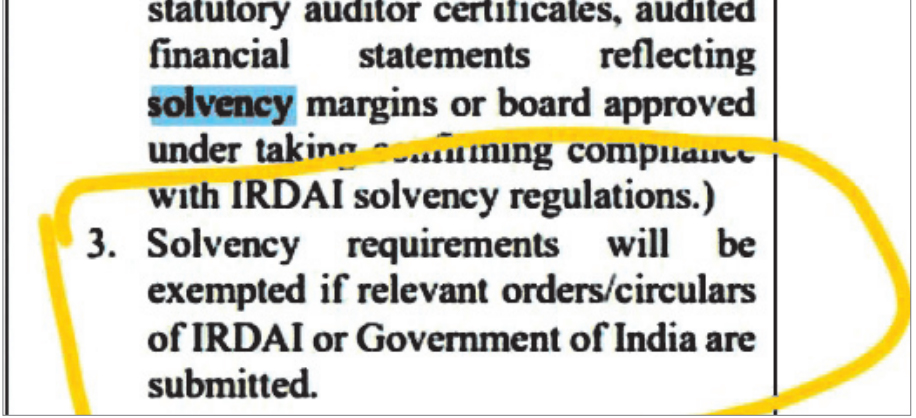
Previously, the same insurance company had withdrawn from the Transco tender due to solvency requirements. However, after the pre-bid stage of the medical department tender, the solvency condition was altered. Authorities reportedly stated that submitting orders issued by the central government would qualify the insurer for exemption from solvency requirements.
This move has raised serious concerns, especially since the contract involves healthcare coverage for approximately 1.42 crore poor and middle-class families in the state. Several major insurance companies have reportedly objected to the government’s decision.
As per the regulations of the Insurance Regulatory and Development Authority of India (IRDAI), every insurance company—whether life, general, or health insurance—must maintain a minimum solvency ratio of 150 percent at all times. For example, if an insurer has potential claim liabilities of ₹100, it must hold assets worth at least ₹150 to ensure claim settlement capacity.
However, the insurance company selected by the government is reportedly facing a solvency ratio shortfall. Observers say the tender norms were strategically altered to accommodate the company despite its financial ineligibility, raising serious questions about transparency and accountability in awarding a contract worth thousands of crores.


