
Rao Bahadur Review and Rating
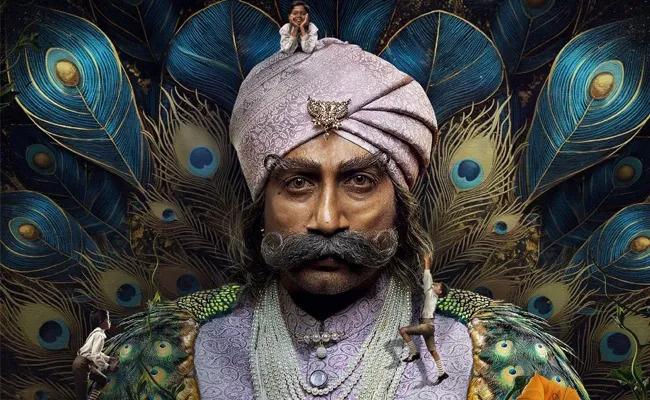
Rao Bahadur Review: Satya Dev Shines in an Ambitious Psychological Drama
Rating: 3/5
Following the critical and commercial success of C/o Kancharapalem, director Venkatesh Maha returned with Uma Maheswara Ugra Roopasya, further cementing his reputation as a filmmaker with a distinct voice. After a brief hiatus, he is back with Rao Bahadur, an ambitious psychological drama starring the immensely talented Satya Dev in the lead. With GMB Entertainment presenting the film and intriguing promotional material raising expectations, Rao Bahadur arrived in theatres carrying the promise of another memorable cinematic experience.
Does Venkatesh Maha recreate the magic of C/o Kancharapalem? Does Satya Dev deliver one of the finest performances of his career? And does the film justify its self-proclaimed tag of being a "Maha Chithram"? Here's our review.
Story
Bhuvanam Ramappa Rao Bahadur (Satya Dev), the heir of a royal family, is battling terminal liver cancer while struggling with alcoholism and an undiagnosed psychological disorder. Despite doctors declaring that he has little time left to live, Ramappa refuses to give up because he is consumed by a single question—whether his second son is truly his biological child.
His relentless pursuit of the truth becomes an obsession that keeps him alive even as death looms over him. Why does Ramappa doubt his wife's fidelity? Why has his wife Renuka (Deepa Thomas) isolated herself inside a dark room? Does Ramappa eventually discover the truth, and what consequences follow when he does?
The answers unfold through an emotionally layered psychological drama.
Performances
Satya Dev is undoubtedly the film's biggest strength. As Bhuvanam Ramappa Rao Bahadur, he delivers what can easily be described as a career-defining performance. Whether it's the physical transformation across different timelines or the emotional and psychological complexity of the character, Satya Dev excels in every frame. His nuanced portrayal never misses a beat and is likely to earn widespread appreciation, besides putting him firmly in contention during the awards season.
Vikas Muppala, playing Ramappa's close friend Narayana Achari, leaves a strong impression with a sincere and natural performance. Given the substantial screen time, he makes excellent use of the opportunity and should receive more prominent character roles going forward.
Deepa Thomas performs with remarkable restraint and maturity as Renuka. Her expressive eyes convey emotions effectively, making her presence impactful despite the limitations in her character arc.
Director Venkatesh Maha appears in an extended cameo and delivers a competent performance. Bala Parasar shines as Achchamma, generating several laughs through understated humour and impeccable dialogue delivery. Veteran actor Anand Bharathi performs well, though his late entry into the narrative feels somewhat forced. The actors portraying Ramappa's sons also do justice to their respective roles.
Technical Aspects
From a technical standpoint, Rao Bahadur is an impressive achievement.
Smaran Sai's background score is haunting and emotionally effective, significantly enhancing several key sequences. While the background music elevates the drama, the soundtrack lacks a standout melody that could have given the film greater recall value.
Kartik Parmar's cinematography is exceptional. His visual composition lends the film an elegant and atmospheric aesthetic. Despite being shot largely at a single location, the film never feels visually repetitive, thanks to the excellent work by both the cinematography and art departments. The production design successfully creates a rich cinematic experience despite the modest budget.
However, the editing emerges as one of the film's weak links. Venkatesh Maha, who also handled the editing duties, perhaps would have benefited from an independent editor. A tighter edit and trimming of the nearly three-hour runtime could have considerably improved the film's overall pacing.
Positives
Satya Dev's extraordinary performance
Excellent cinematography and technical craftsmanship
Thought-provoking dialogue writing
Interesting twists towards the climax
Negatives
Insufficient emotional depth
Slow and stretched narration
Overly preachy storytelling
Analysis
C/o Kancharapalem succeeded because of its organic storytelling, emotionally rich characters and honest narrative. Its climax twist worked because it emerged naturally from the story rather than existing merely to surprise the audience.
With Rao Bahadur, Venkatesh Maha appears to have taken the opposite approach. The screenplay often feels as though it was built around the climax twist rather than allowing the narrative to organically arrive there. While the twists themselves are effective, the journey leading up to them frequently fluctuates between engaging and exhausting.
The film's strongest assets remain Satya Dev's phenomenal performance and Smaran Sai's powerful background score. Together, they elevate several sequences that otherwise struggle under the weight of the screenplay.
Visually, the film is outstanding. The cinematography, art direction and production design work in perfect harmony to create an immersive atmosphere. The second half carries better emotional weight than the first, while the dark situational humour—particularly involving the maid's character—provides welcome relief.
The final 20-25 minutes are among the film's strongest, delivering engaging dramatic moments alongside multiple twists. However, these revelations occasionally feel engineered purely to shock the audience rather than emerging naturally from the narrative.
The dialogue writing deserves special appreciation. Several conversations are layered with intelligence and social commentary. That said, the writing of Renuka's character is inconsistent. She is initially portrayed as a strong, independent woman but later transforms into a submissive wife without sufficient emotional or narrative justification.
The film's biggest challenge lies in balancing its social commentary with storytelling. Venkatesh Maha attempts to address a wide range of themes—from the Mahabharata, Mahatma Gandhi, religion, caste, class and geopolitics to colour discrimination and economic inequality. While these observations are intellectually stimulating, their relentless inclusion often slows the narrative and makes the film feel more like an extended lecture than an emotionally engaging drama.
The central idea—that unchecked suspicion can destroy lives—holds tremendous dramatic potential. Unfortunately, the film's constant urge to make larger social statements prevents that core emotional conflict from reaching its full impact.
Verdict
Rao Bahadur is an ambitious psychological drama anchored by an unforgettable performance from Satya Dev. It boasts impressive technical quality, striking visuals and several thought-provoking dialogues. However, its overlong runtime, uneven emotional engagement, preachy tone and excessive reliance on its climax twists prevent it from becoming the great film it aspires to be.
While Venkatesh Maha's intent to create meaningful cinema is evident in every frame, intention alone cannot substitute compelling storytelling. Rao Bahadur ultimately remains a sincere, technically accomplished and intellectually stimulating effort that falls short of realizing the full potential of its powerful central premise.


