
Dorothy Movie Review: How Is Karthik Subbaraj's Film?
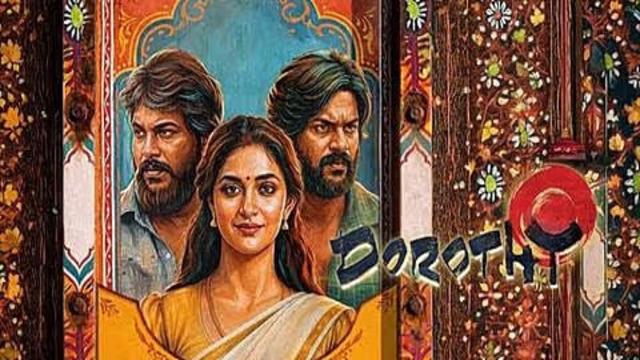
Written and directed by Karthik Subbaraj, Dorothy stars Keerthy Suresh, Sananth and Rishikanth in lead roles. The Tamil film, which was released on September 25, became a topic of widespread discussion, with audiences expressing sharply contrasting opinions about its sensitive themes. While some sections of viewers criticised the film, others appreciated its attempt to address important social issues.
Now, the film has arrived in Telugu through Rana Daggubati's Spirit Media. Released in theatres on Friday, October 2, Dorothy explores gender discrimination, patriarchy, social inequalities and the struggles faced by transgender people. Here's a closer look at the film's storyline, performances, technical aspects and overall execution.
Dorothy Movie Story
Set in a rural village in Tamil Nadu in 1995, Dorothy revolves around Subbu (Sananth) and Karthi (Rishikanth), two close friends who come from different social backgrounds. Subbu loses his mother at a young age, while his father is a locally influential gangster. His two elder brothers are also involved in rowdyism and politics. Growing up in such an environment, both Subbu and Karthi eventually become part of the same gang.
Interestingly, Subbu undergoes a significant transformation as he grows older. Although he belongs to a violent gangster family, he develops an aversion to bloodshed and cannot tolerate violence. He also forms a close bond with Dorothy (Keerthy Suresh), who enters the family as his sister-in-law.
However, an unexpected tragedy changes Subbu's life when Dorothy dies. Believing that his father and brothers are responsible for her death, Subbu makes a life-changing decision that sets the story on a different path.
What is the decision Subbu makes, and how does it transform his life? Why does his childhood friend Karthi turn against him and attempt to kill him? What happens to their friendship as the story progresses? The answers unfold throughout the film.
Dorothy Movie Review: Screenplay and Direction
Karthik Subbaraj is known for incorporating strong social themes into his films, often addressing caste discrimination, social inequalities and other deep-rooted issues through engaging narratives. Dorothy follows a similar approach, focusing primarily on gender discrimination, transgender identity and the challenges faced by transgender people in a patriarchal society.
The director chooses a sensitive subject and attempts to portray the emotional struggles, humiliation and discrimination experienced by transgender individuals. The film also highlights how rigid social expectations and patriarchal attitudes affect their lives and relationships. Karthik Subbaraj deserves recognition for bringing such a subject to the forefront through a mainstream cinematic narrative.
However, the film does not entirely succeed in translating its central idea into an engaging theatrical experience. The non-linear screenplay, which moves between different timelines, creates confusion in several portions. Although the core concept is meaningful, some of the sequences surrounding it fail to make a strong impact.
The film begins by introducing the friendship between Subbu and Karthi, along with their childhood experiences, family backgrounds and the caste-based politics and violence prevalent in their village. These initial portions gradually establish the characters and their circumstances.
The narrative gains momentum with Dorothy's entry. Subbu develops a strong emotional connection with her, sharing his thoughts and personal struggles. Her unexpected death introduces a major turning point, and the subsequent developments gradually build curiosity towards the interval.
The second half takes a more emotional approach, focusing on Subbu's transformation and the hardships faced by transgender people. Some of these sequences are moving, but the director could have explored the characters' internal conflicts and social struggles in greater depth. Instead, several important aspects are only briefly addressed, leaving certain questions unanswered.
The slow pace is another major drawback. Several scenes feel unnecessarily prolonged, affecting the overall flow of the narrative. While the film has a relevant social message, its execution lacks the consistency needed to maintain audience engagement throughout. The climax may also divide viewers, as it does not offer a universally satisfying conclusion.
A more tightly structured screenplay, sharper editing and a deeper exploration of the central conflict could have made the film more impactful.
Performances
Sananth delivers a convincing performance as Subbu, effectively portraying the character's emotional journey and gradual transformation. His portrayal becomes particularly noteworthy in the portions where Subbu transitions into a transgender identity. His expressions, body language and emotional nuances lend authenticity to the character.
Rishikanth also performs well as Karthi, bringing the required intensity and emotional depth to his role. The chemistry between Sananth and Rishikanth is one of the film's notable strengths, particularly in scenes depicting their childhood friendship and later conflicts.
Keerthy Suresh has limited screen time, but her portrayal of Dorothy leaves a lasting impression. She brings warmth and emotional depth to the character, making her presence significant to the story despite her brief appearance.
The supporting cast also delivers satisfactory performances, contributing effectively to the film's rural setting and emotional narrative.
Technical Aspects
Ilaiyaraaja's background score is one of the film's major strengths, enhancing the emotional impact of several key sequences. The songs are also appealing and complement the narrative.
The cinematography effectively captures the rural atmosphere of 1995 Tamil Nadu, supporting the film's setting and visual storytelling. The production values are satisfactory, with the technical team maintaining consistency throughout the film.
However, the editing could have been considerably tighter. Several scenes feel stretched, and trimming unnecessary portions would have improved the film's pace and overall impact.
Final Verdict
Dorothy is a socially relevant drama that attempts to explore gender discrimination, transgender identity and the impact of patriarchy through an emotional story of friendship, family and personal transformation. Sananth and Rishikanth deliver noteworthy performances, while Keerthy Suresh makes a memorable impression despite her limited screen presence. Ilaiyaraaja's music further strengthens the emotional aspects of the film.
Despite its meaningful subject and strong performances, the film is held back by its slow narration, confusing non-linear screenplay and uneven execution. While Karthik Subbaraj succeeds in conveying the intended social message, the storytelling could have been more engaging.
Dorothy is a socially driven emotional drama with sincere performances and a relevant message, but its slow pace and screenplay shortcomings affect the overall viewing experience.


