
IIT Roorkee Unveils World’s First AI to Decode Ancient Modi Script
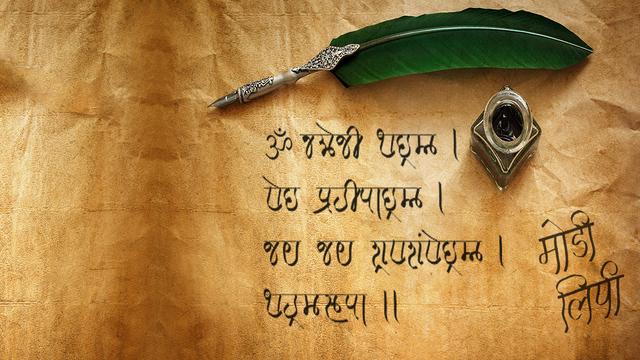
In a major breakthrough, the Indian Institute of Technology Roorkee (IIT-Roorkee) has helped develop the world’s first AI model that can read and convert the ancient Modi script into Devanagari, the script used for Hindi and many Indian languages.
This innovation marks a significant step in connecting India’s rich historical legacy with modern technology. The AI model, called MoScNet, uses a Vision-Language Model (VLM) to read old handwritten documents and convert them into readable, digital text.
The project, titled "Historic Scripts to Modern Vision," also includes a first-of-its-kind dataset named MoDeTrans. This dataset features over 2,000 images of real Modi script manuscripts from three major historical periods—Shivakalin, Peshwekalin, and Anglakalin—paired with expert-verified Devanagari translations.
Led by Prof. Sparsh Mittal, the MoScNet model is designed to be lightweight and scalable, making it ideal for use even in low-resource settings.
Speaking about the broader impact, IIT Roorkee Director Prof. Kamal Kishore Pant said that AI is not just about automation—it can also help revive India’s cultural heritage, enhance academic research, and support nation-building.
“This project captures the true spirit of Viksit Bharat, preserving India’s timeless wisdom and making it accessible to the world,” he said.
There are an estimated 40 million documents written in the Modi script across India, covering a wide range of subjects—from land records and Ayurveda to medieval science. But with very few experts left and many records in poor condition, digitization has been slow.
That’s where MoDeTrans comes in—it speeds up the process of transcription and opens up these documents for scholars, historians, and even the public.
The project also supports India’s digital transformation goals under initiatives like Digital India, Azadi Ka Amrit Mahotsav, and the National Language Translation Mission (NLTM). It’s expected to integrate with future platforms like BharatGPT and Bhashini, enhancing multilingual AI tools and giving broader access to India’s cultural heritage.
In essence, this is not just a technological achievement—it's a leap toward preserving India’s medieval knowledge for generations to come.


