
Delhi Air Pollution: Will Rain Help Reduce Pollution Levels in the Coming Days?
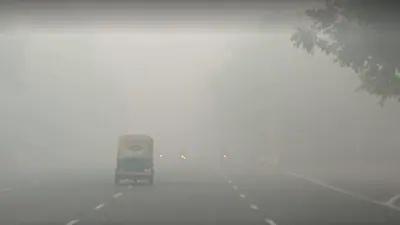
Delhi continues to struggle with air pollution, with the city's Air Quality Index (AQI) remaining in the 'very poor' category. The overall AQI stood at 311 at 6 am on November 10, according to official data.
Several parts of the national capital recorded high pollution levels, with some areas nearing the 'severe' category. Chandni Chowk recorded the highest AQI at 400, followed by Pusa at 398 and NSUT Jaffarpur at 384. Commonwealth Sports Complex recorded 380, while Sirifort registered 375.
There is little chance of immediate relief as the India Meteorological Department (IMD) has forecast no rainfall in Delhi until November 15. An approaching Western Disturbance is expected to affect the western Himalayan region, but it is unlikely to bring rain to the national capital.
Wind speeds are also expected to remain relatively low, between 5 and 15 kmph. Without rain or strong winds, pollutants may continue to remain trapped in the atmosphere, keeping air quality poor across Delhi-NCR. Light to moderate fog is also expected during morning hours.
Temperatures are unlikely to change significantly over the next few days. The maximum temperature is expected to remain between 27 and 30 degrees Celsius, while the minimum temperature may range from 14 to 17 degrees Celsius until November 15.
Although Delhi's AQI improved slightly after Diwali, pollution levels remain a major concern. The absence of rain and strong winds could make it difficult for the city to get relief from the polluted air in the coming days.

