
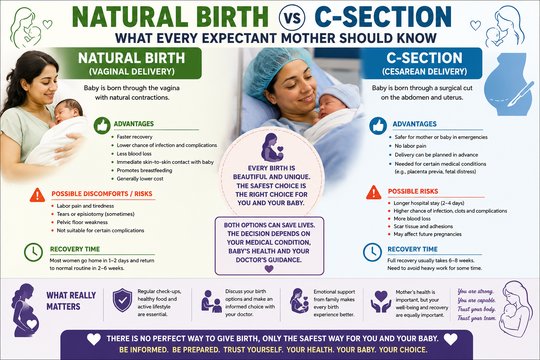
Natural Birth vs C-Section: What Every Expectant Mother Should Know
Pregnancy is often a time of excitement, happiness and anticipation. But along with the joy of becoming a mother, many women also experience anxiety—especially when it comes to labour pain, vaginal birth and the possibility of a C-section.
Questions such as “Will I have a normal birth?”, “How can I manage labour pain?” and “If I had a C-section before, can I have a vaginal birth this time?” are common among expectant mothers.
In a conversation with Sakshi Post, expert in Gynecology Dr. Pallavi Chandra Rao addressed several common concerns about natural birth, labour pain, VBAC, birthing positions, pregnancy myths and the importance of making informed decisions.
What Exactly Is a Natural or Normal Birth?
According to Dr. Pallavi, the term “normal birth” is preferable to “normal delivery.”
Natural birth refers to a woman going into labour spontaneously, progressing through labour and giving birth without medical interventions such as medications or instruments.
The human body is naturally designed for the process of childbirth, although medical interventions may sometimes become necessary to protect the mother or baby.
Benefits of Natural Birth for Mother and Baby
Natural birth can help the mother recover faster because she goes through the body's natural birth process without major surgery.
Some potential benefits include:
- Faster recovery and mobility
- Earlier return to routine activities
- Easier initial bonding and care of the baby
- Avoiding surgical recovery associated with a C-section
For babies, the natural birth process may help clear fluid from the lungs. Dr. Pallavi also discussed research linking Caesarean birth with certain longer-term health concerns, including allergies, asthma and childhood obesity, although individual outcomes can vary.
Labour Pain: There Are Several Ways to Manage It
Fear of labour pain is one of the biggest concerns among pregnant women. Dr. Pallavi emphasised that women should not feel that asking for pain relief means they have failed.
Several non-medical methods can help manage labour discomfort, including:
- Walking
- Breathing exercises
- Warm showers
- Back massage
- Staying active and changing positions
Hydrotherapy or water birth may also be an option in facilities where it is available and appropriately supervised.
What About an Epidural?
An epidural is another option for labour pain relief. According to Dr. Pallavi, the low-dose epidurals used during labour are intended to reduce pain while allowing the mother to remain involved in the birthing process.
She also clarified a common concern: an epidural does not cause long-term back pain. Postpartum back pain can instead be associated with factors such as inadequate back care and prolonged sitting.
The choice of pain relief should ultimately be discussed with the healthcare team based on the mother's circumstances and preferences.
How Can Women Prepare for a Natural Birth?
Pregnancy should not automatically be treated like an illness, Dr. Pallavi said. Unless there is a medical reason for restrictions, women should try to remain physically active.
Helpful measures include:
- Walking and appropriate pregnancy exercises
- Continuing routine activities where medically appropriate
- Attending childbirth preparation classes
- Learning about labour and birth beforehand
- Attending regular antenatal check-ups
- Monitoring weight gain
- Identifying and managing conditions such as diabetes and hypertension
She also cautioned against excessive fear created by social media. Every mother, pregnancy, baby and birth experience is different.
Previous C-Section Does Not Always Mean Another C-Section
One of the most common misconceptions is that a woman who has undergone a C-section must have a C-section for every subsequent pregnancy.
Dr. Pallavi explained that VBAC (Vaginal Birth After Caesarean) may be possible for some women, but it is not suitable for everyone.
Doctors consider several factors, including:
- The reason for the previous C-section
- The type and location of the uterine incision
- Any complications during the previous surgery
- Excessive bleeding or blood transfusion
- Previous infection or other surgical complications
- The interval between pregnancies and deliveries
The decision must be individualised after discussing the potential benefits and risks with the couple and healthcare team.
A C-Section Is Not a Failure
Dr. Pallavi strongly rejected the idea that vaginal birth is a “success” while a C-section represents failure.
A C-section can be a life-saving procedure when complications arise.
For example, if a baby's heart rate suddenly drops during labour or there is another serious indication, timely Caesarean delivery may be necessary to protect the baby.
The ultimate goal is not simply to achieve a particular mode of birth. The priority is a healthy mother and a healthy baby.
Birthing Positions Can Make a Difference
Traditionally, women are often asked to lie flat on their backs during delivery. However, Dr. Pallavi explained that this may not always be the most comfortable or effective position.
Depending on the mother's condition and the medical circumstances, different positions may be considered, such as:
- Upright or sitting positions
- Squatting
- Side-lying positions
- Hands-and-knees or all-fours positions
The important point is that healthcare professionals should be trained and comfortable supporting appropriate birthing positions.
Why Midwives Are Important During Labour
Dr. Pallavi described midwives as an extremely important part of the labour-room team.
Unlike doctors who may have to attend to several patients, a midwife can provide continuous, dedicated support to a woman and her partner throughout labour.
Midwives receive specialised training in supporting natural birth and can assist women with positioning, comfort measures and labour support.
Collaborative care involving doctors, midwives and the family can create a better birthing experience.
Can Women With Diabetes or High BP Have a Natural Birth?
Having conditions such as diabetes or hypertension does not automatically rule out vaginal birth.
According to Dr. Pallavi, women with well-controlled diabetes or hypertension may still be considered for natural birth, depending on their overall condition.
Every pregnancy must be assessed individually.
What About Twin Pregnancies?
Even with twins, vaginal birth may sometimes be possible.
For example, if the first baby is in a head-down position and there are no other major complications, doctors may consider attempting vaginal birth after discussing the risks and obtaining appropriate consent.
The position of the second baby can change the situation, and the medical team must be prepared for different possibilities.
What If the Baby Is in a Breech Position?
A breech presentation does not always mean that vaginal birth is impossible, but the circumstances are important.
For a first-time mother with a breech baby, vaginal birth is generally not routinely attempted according to the approach described by Dr. Pallavi.
For women who have previously had a vaginal birth, however, the situation can be different and may be assessed individually.
Certain positioning exercises may sometimes be recommended, while trained doctors can also consider procedures such as external cephalic version to turn a breech baby into a head-down position when appropriate.
Why Emergency C-Sections Sometimes Become Necessary
A woman may begin labour with the intention of having a vaginal birth, but circumstances can change suddenly.
For instance, fetal heart-rate abnormalities, maternal fever or other complications may require an urgent decision.
Dr. Pallavi highlighted the importance of transparency, communication and timely decision-making. When the medical team explains what is happening and why an intervention is needed, the mother and her birth companion can better understand the decision.
The Role of the Birth Companion
Having a birth companion can provide emotional reassurance during labour and even during a Caesarean procedure, where hospital policies permit it.
Dr. Pallavi described how communication with the mother and her companion can help reduce anxiety and build trust throughout the process.
Pregnancy Myths: “Eating for Two” Is Not Necessary
One common pregnancy myth is that a pregnant woman needs to eat for two people.
Dr. Pallavi called this a myth. Pregnancy requires a balanced and nutritious diet, rather than simply doubling food intake.
A healthy diet should include:
- Fresh fruits
- Vegetables
- Adequate protein
- Nutritious everyday foods
Excessive eating can contribute to unnecessary weight gain and increase the risk of problems such as diabetes and hypertension.
Does Walking Make Normal Birth Easier?
Staying active during pregnancy, when medically appropriate, can support overall fitness and may help women cope better with pregnancy and labour.
Routine walking, pregnancy-appropriate exercise and maintaining activity levels are preferable to unnecessary bed rest unless a doctor has specifically recommended restricted activity.
Papaya and Pineapple: Do They Cause Miscarriage?
Another widespread belief is that eating papaya or pineapple during pregnancy causes miscarriage.
Dr. Pallavi described this as a myth and also dismissed the popular belief that eating papaya, pineapple or dates towards the end of pregnancy will automatically trigger labour.
Pregnant women should nevertheless discuss their individual dietary needs with their healthcare provider.
Can Pregnant Women Drink Tea or Coffee?
Tea and coffee do not necessarily have to be completely eliminated during pregnancy, according to the discussion. However, moderation is important.
Dr. Pallavi specifically advised women to avoid smoking, alcohol and unprescribed medication during pregnancy.
Should Pregnant Women Avoid Medicines When They Have Fever?
Some women avoid medication during pregnancy because they fear that medicines could harm the baby.
Dr. Pallavi explained that untreated high fever or infections can themselves pose problems. Medicines prescribed by a doctor after considering pregnancy safety can help treat the mother's condition.
However, pregnant women should not self-medicate or take over-the-counter medicines without medical advice.
Can the Baby's Gender Be Predicted From the Belly Shape?
The shape of a pregnant woman's abdomen cannot reliably indicate whether she is carrying a boy or a girl.
Claims based on belly shape, the baby's heart rate or whether the pregnancy appears “high” or “low” are myths.
A Small Pelvis Does Not Automatically Mean a C-Section
Another common belief is that women with a smaller body frame or pelvis cannot have a vaginal birth.
Dr. Pallavi explained that genuine conditions such as a severely contracted pelvis are rare. A woman's height or appearance alone cannot determine whether vaginal birth is possible.
In many cases, labour itself provides important information about how the mother and baby are progressing.
Does Saffron Make the Baby Fair?
The belief that drinking saffron milk during pregnancy will make a baby fair is another popular myth.
A baby's complexion is primarily determined by genetics, not by saffron consumed during pregnancy.
The focus during pregnancy should be on having a healthy baby, rather than trying to influence the baby's complexion.
What Should Pregnant Women Eat?
There is no need for an expensive or complicated pregnancy diet.
A balanced diet containing fresh fruits, vegetables, protein and other nutritious foods can provide important nutrients. Pregnant women should also try to limit highly processed and outside foods.
The emphasis should be on overall nutritional balance rather than expensive “superfoods” or large quantities of dry fruits.
Every Pregnancy and Every Birth Is Different
Dr. Pallavi's central message to expectant mothers was simple: do not compare your pregnancy with someone else's.
A first birth may be different from a second birth. One woman's labour experience may be completely different from another's.
Social media birth stories can sometimes increase anxiety and unrealistic expectations. Instead of constantly comparing experiences, women should discuss their concerns directly with their doctors or qualified healthcare providers.
The Most Important Outcome Is a Healthy Mother and Baby
Whether a woman has a natural birth, assisted birth or Caesarean section, the most important outcome is the safety and well-being of both mother and baby.
Women should never feel like failures if a C-section becomes medically necessary.
Pregnancy is a journey to be understood and experienced—not a competition to achieve a particular type of birth.
Regular check-ups, appropriate physical activity, childbirth education, a balanced diet, open communication with healthcare providers and timely medical decisions can help women approach childbirth with greater confidence and less fear.


