
Beyond the Code: How Avinash Khanderi Built a Global Career Across Data, AI and Research
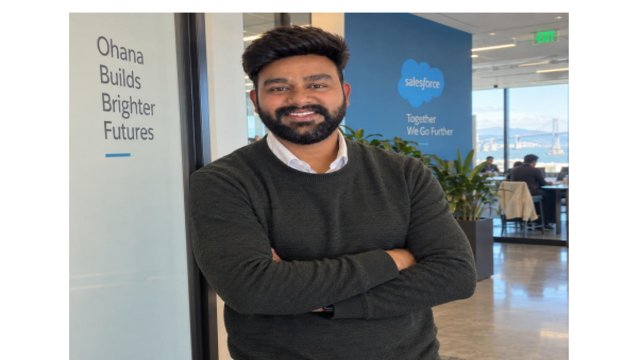
From beginning his technology journey in India to working with Amazon, IBM, Visa, Walmart and Salesforce in the United States, Avinash Khanderi’s career has evolved beyond enterprise engineering into research, international conferences and responsible AI.
A successful technology career is often measured by the companies on a resume. But for Avinash Khanderi, the more interesting story lies in how his role has continued to evolve—from working with data and enterprise systems to engaging with research, international technology conferences and emerging conversations around artificial intelligence.
With more than eight years of experience, Khanderi has built his professional journey around data engineering, cloud technologies, distributed computing and increasingly Artificial Intelligence for IT Operations (AIOps). His career has taken him through Amazon, IBM, Tech Plus Solutions, Visa and Walmart before his current chapter at Salesforce in the United States. His professional profile describes experience in building enterprise data platforms, reliable pipelines, data-quality frameworks and analytics-oriented systems.
What makes his trajectory notable, however, is that his work is no longer confined to engineering inside corporations. Alongside his industry career, Khanderi has expanded into research, peer review, conference participation and professional technology communities.
A Career That Began With Data
Khanderi entered the technology industry in 2018 as an Associate Data Engineer with Amazon India.
The early years of his career revolved around SQL, databases, analytics and data processing. A subsequent role with IBM in Hyderabad introduced him to large-scale technologies including Hadoop, Spark, Hive and MapReduce.
That foundation became important as enterprise computing underwent a major transformation.
Organizations were moving away from conventional databases and on-premise infrastructure toward distributed processing, cloud platforms and increasingly complex data ecosystems.
Khanderi moved with that transformation.
His next stint with Tech Plus Solutions in the United Kingdom expanded his exposure to Python, PySpark, Hadoop and AWS-based data environments. His profile describes work involving the migration and transformation of tens of millions of records and the automation of recurring data-processing activities.
The journey eventually brought him to the United States.
Moving Into Enterprise-Scale Engineering
At Visa, where he worked in cloud data infrastructure between 2022 and 2024, the scale of the systems became considerably larger.
His professional profile records work involving cloud pipelines processing more than 100 million records monthly, datasets exceeding 8TB and Kafka-based ingestion handling millions of daily events.
Khanderi subsequently joined Walmart as a Senior Data Engineer, working with retail and operational datasets through technologies including Databricks, PySpark, Delta Lake, Azure Data Factory and Azure Synapse Analytics.
Each transition represented more than a change of employer. It reflected the evolution of data engineering itself—from traditional analytics to cloud-native platforms capable of supporting enormous volumes of continuously generated information.
The Salesforce Chapter
In March 2026, Khanderi began a new professional chapter at Salesforce.
His current work brings data engineering closer to AIOps, where operational information can be used to understand system behaviour, identify anomalies and improve the reliability of complex technology environments.
According to his professional profile, his work at Salesforce has involved cloud data pipelines handling more than 200 million records, ETL and ELT workflows across more than 15TB of structured and semi-structured data, and monitoring across hundreds of daily pipeline executions.
His responsibilities also extend into automated data-quality validation, metadata management, operational telemetry and Salesforce Data Cloud and Data 360 integrations.
The progression reflects a larger shift occurring across the technology sector: data infrastructure is increasingly becoming the foundation upon which enterprise AI is built.
When an Engineer Becomes Part of the Research Conversation
Khanderi's story takes a different turn beyond his corporate career.
Rather than remaining solely an industry practitioner, he began participating in the academic and research ecosystem surrounding emerging technologies.
His professional portfolio lists more than 22 peer-reviewed research papers, seven book chapters, one technical book and one patent.
He has also served as a reviewer for research submissions.
According to information provided by Khanderi, he has reviewed more than 100 research papers, evaluating technical work submitted through research and conference channels.
Peer review occupies an important position in academic publishing. Reviewers examine aspects such as methodology, originality, technical soundness, clarity and relevance before providing recommendations and feedback on submitted research.
For an engineer whose professional life is centred on real-world technology systems, reviewing academic research also creates an unusual bridge between two worlds—what researchers are investigating and what enterprises are actually implementing.
Taking the Conversation to International Conferences
That bridge has also taken Khanderi onto international conference platforms.
He has been associated with the International Conference on Advances in Computer Engineering and Communication Systems (ICACECS) as a speaker and reviewer.
His conference involvement has included discussions around artificial intelligence and intelligent technologies, allowing him to take lessons from enterprise engineering into a broader community of researchers, academicians and technology professionals.
Khanderi has also been associated with the International Conference on Computer and Communication Technologies (IC3T) as a speaker and reviewer, further extending his engagement with international research communities.
These engagements represent another stage in his professional progression: from building systems, to studying emerging technologies, to evaluating research and eventually discussing those ideas before international audiences.
More Than Certifications
Khanderi has continued to develop his technical credentials alongside this work.
His professional portfolio lists certifications including Salesforce Certified Platform Developer, Confluent Certified Developer for Apache Kafka, Microsoft Certified Azure AI Fundamentals, Microsoft Certified Azure Data Engineer Associate and Snowflake SnowPro Core.
He is also an active member of IEEE, participating in the broader professional technology community.
But certifications and titles tell only part of the story.
Khanderi's career reflects something increasingly important in technology: the ability to continuously reinvent one's expertise.
The tools he used at the beginning of his career are not necessarily the technologies defining his work today. SQL and traditional analytics expanded into Hadoop and distributed computing; distributed systems expanded into cloud platforms; cloud engineering is now converging with AI and intelligent operations.
A New Question: Can AI Become Greener?
As his work moved closer to artificial intelligence, Khanderi also began exploring another question: what happens to computing efficiency as AI systems become larger?
That interest resulted in the establishment of The Green AI Initiative, which is listed among his professional contributions.
The premise is increasingly relevant.
The global race to develop more capable AI systems has created enormous demand for computing infrastructure. That makes efficiency, resource utilization and sustainability important engineering considerations alongside model performance.
For Khanderi, the future of artificial intelligence therefore cannot be viewed exclusively through the lens of capability.
It must also involve responsibility.
“AI innovation should not be measured only by how powerful a system becomes. We should also think about how efficiently we build and operate it, and how technology can continue advancing responsibly,” Khanderi says.
An Indian Technology Story Going Global
Khanderi's journey mirrors a larger transformation among Indian technology professionals.
A generation that once predominantly participated in global technology through software services is increasingly working across product engineering, cloud architecture, artificial intelligence, cybersecurity and advanced research.
Khanderi's own progression captures several dimensions of that transformation.
He began as an engineer working with data in India. His career then crossed geographies and technology generations—Amazon to IBM, the United Kingdom to the United States, Visa to Walmart and now Salesforce.
Along the way, the definition of his work expanded.
He became not only someone who builds data systems, but someone who publishes research, reviews the work of other researchers, participates in international conferences and explores questions surrounding the future of AI.
Success Is a Moving Target
For young engineers looking at careers in artificial intelligence and data, Khanderi believes one principle remains particularly important: do not build a career around a single technology.
Programming languages change. Platforms evolve. Technologies that dominate one decade can become secondary in the next.
The ability to learn, adapt and solve increasingly difficult problems lasts longer.
His own eight-year journey demonstrates that philosophy.
From processing data to building cloud-scale pipelines; from enterprise engineering to AIOps; from reading research to publishing and reviewing it; and from participating in technology communities to speaking on international platforms—the direction has continually expanded.
Today, Salesforce represents the latest milestone in that journey.
But Khanderi sees the next chapter at the intersection of data, artificial intelligence, intelligent operations and responsible computing.
For an engineer whose career began with making sense of data, the ambition has become considerably larger: to help shape how intelligent technology is built, evaluated and used in the years ahead.


