UP Poll Pulse IV: Political Marketing in Uttar Pradesh

A Peoples Pulse Report
A look at the ‘political advertisements’ across Uttar Pradesh throws an interesting case of ‘omission and commission’ by various parties that can act as a gateway into the minds of the ‘electoral strategists’ or new crop of professional ‘election-management-experts’ who are leaving no stone unturned to ensure the return of their client party into the corridors of power.
BJP, whose campaign strategy is being managed by extremely low profile members of ‘Association of Billion Minds (ABM)’, comprised of members who started their ‘electoral management’ career with Prashant Kishore under the forum of ‘Citizens for Accountable Governance (CAG)’ that managed Modi’s 2014 blitzkrieg, primarily centred on the five frontiers, namely, ‘Data Analytics’, ‘Media and External Communications’, ‘Research’, ‘Digital Communication’ and ‘Field Operations’. It has employed the predictable 360 degree campaign strategy by carpet bombing all the public spaces through its ‘political advertisements’, with the aim of constituting a ‘perception-advantage’ vis a vis its rivals.
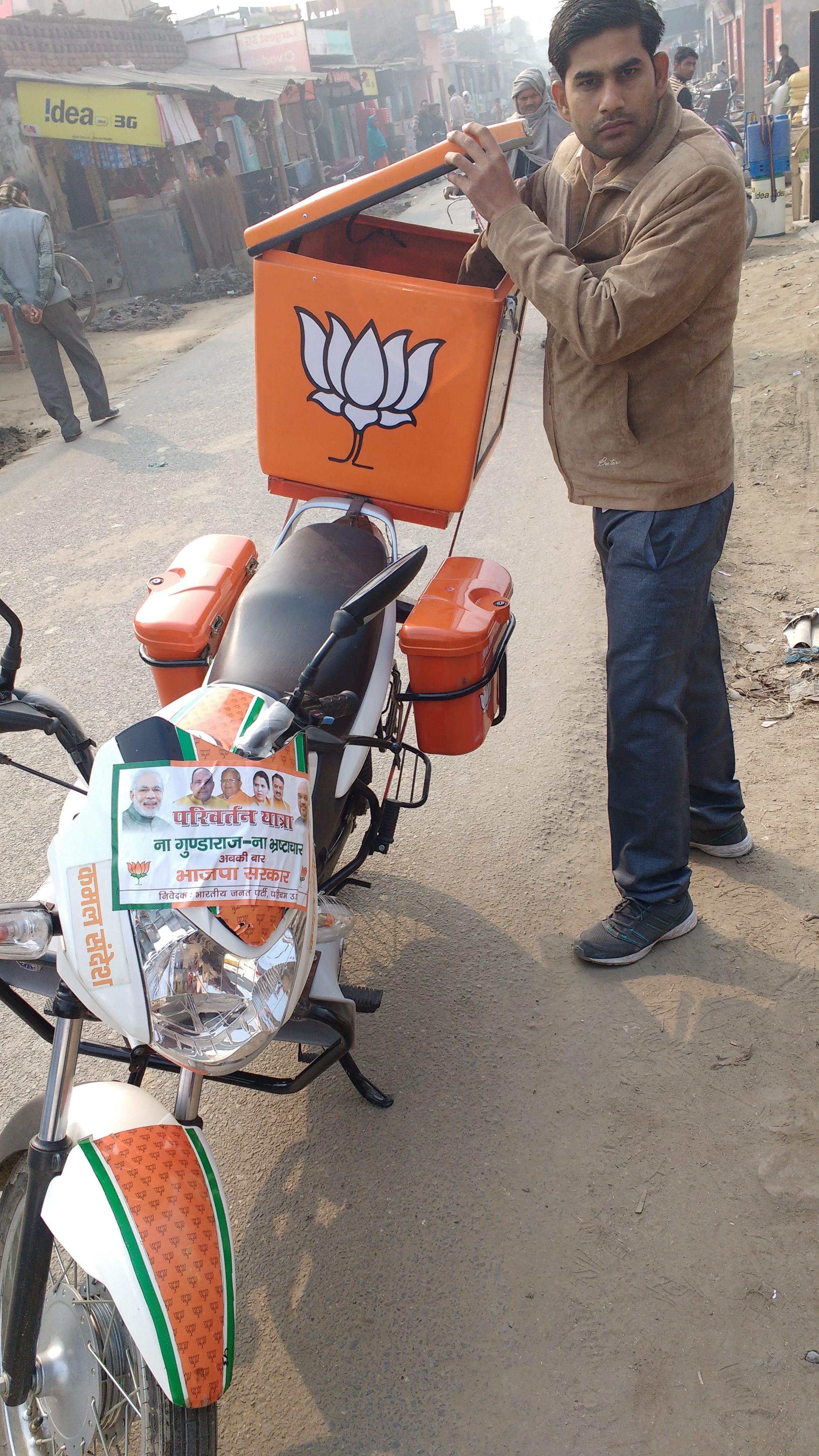
The strategy is the repetition of party’s approach in 2014 Lok Sabha election and 2015 Bihar Assembly election. This game of constituting ‘perception advantage’ is a well-planned strategy in campaign management wherein the faces of the leaders are carefully planned and projected to construct the central narrative of the election around the said leader/s. Thus, the BJP’s posters, banners, billboards and stickers, shining throughout the market squares, important public spaces as well as around streets and corners of the state, reveal the trend of Narendra Modi and Amit Shah occupying the central space, while, Rajnath Singh (Rajput), Kalraj Mishra (Brahmin), Uma Bharti (Lodh OBC) and its state president Keshav Prasad Maurya (Kushvaha OBC) finding a constant presence, albeit, in miniscule sizes.
From analytical viewpoint, what is most intriguing and counter-intuitive in BJP’s posters is the missing face of Atal Bihari Vajpayee that has happened for the first time in the electoral history of the state since 1980 when the saffron party came into existence. The fact that Uttar Pradesh had been Atal Bihari Vajpayee’s political turf and BJP needs to appeal to numerically significant Brahmins, who still claim to have special reverence for the party patriarch, makes the strategy of blanking out his image all the more puzzling. Even at the party headquarter at Lucknow, that surprisingly has one lone poster of L.K Advani, the same of Atal Bihari Vajpayee is completely missing despite the fact that December 25 was his Birthday when Modi shared an old video to claim his closeness to the grand old leader.
Technical explanations apart, the visual act of ‘omission and commission’ by BJP seem to be driven by the twin compulsion of the party, namely,
a) to build the narrative exclusively around Narendra Modi in the backdrop of its dilemma on the issue of projecting any Chief Ministerial face that may boomerang by alienating some castes/communities who have selective preference for leaders for the post, and,
b) to cater to the political aspirations of non-Yadav OBCs by sending a subtle but clear message, marking the heralding of a new era under the joint leadership of Narendra Modi at the centre and Keshav Prasad Maurya at the state.
Assured by the inclination of upper castes towards BJP, the party is investing most of its energy in consolidating the non-Yadav OBCs by various means including 200 ‘Pichhda Varg Sammelans’ (Backward Class Conclaves). Interestingly, BJP, that has also organized separate conclaves for woman and youths, doesn’t have any such program for Dalits, which indicate the party’s focused strategy to focus primarily on castes/communities, that in its assessment, are more likely to be steered towards its fold, rather than targeting sections who are considered committed voters for other parties. Moreover, the factors like the mitigation of ‘Goonda-Raj’ image of incumbent Samajvadi Party under the leadership of Akhilesh Yadav displacing BJP’s central plank of asking for change against lawlessness and hooliganism; the emergence of demonetization as an electoral liability denting BJP’s strategy of asking for mandate in the name of development; the electoral saturation of Ram-Temple centred grand Hindutva agenda depriving the party of constructing a ‘Hindu’ vote-bank; have left the party with overt dependence upon the strategy of crafting electorally viable ‘social-engineering’ by privileging non-Yadav OBCs over others. This explains the poster puzzle of BJP.
Similarly, Akhilesh Yadav-led Samajwadi party that for all practical purposes has already emerged as the true successor of the party in popular perception, in its zeal to match the maddening campaign level of BJP and to compete with the ‘leviathan election management’ approach of the same has availed the services of political consulting company, ‘SJB Strategies International’, headed by its CEO Steve Jarding, who also happen to be a lecturer at Harvard University wherein he offers courses on ‘Campaign Management’ and ‘Making of a Politician’. Reportedly, they are also adopting the same standard model of demographic and issue profiling, running down to polling booth level, besides marketing and grossly privileging the image of its supreme leaders over others.
Hence, much before the inner feud in the family unfolded, the image of Akhilesh Yadav had already eclipsed Mulayam Singh Yadav and other leaders in ‘political advertisements’. Alarmed by the electoral liability on account of party’s existing ‘Goonda image’, the new posters of Samajwadi Party started making personalized appeals to its various social constituencies like ‘youths’, ‘women’, ‘farmers’, ‘artisans’, and even ‘businessmen’ in the name of Akhilesh Yadav rather than collective leadership. This approach also shares the assumption that politics and elections are manageable and marketable by mapping out the specific grievances of various sections, divided in terms of social and occupational identities, followed by employing the targeted mix of positive and negative propaganda around those grievances, thereby attempting to convert elections as much into a psychological war as a political one.
However, these strategies work effectively only when a party or a leader has an ‘off the bloc advantage’ over others- something that happened in 2014 Lok Sabha election- as non-BJP parties were not prepared to counter the first ever intimidating 360-degree campaign of BJP centred around Modi, meticulously planned in every detail and yet made to appear natural and spontaneous. In the context, when most of the parties become aware of the art of presenting the ‘artificial and managed as natural and spontaneous’ and start availing the services of the experts of ‘political marketing’, the entire exercise becomes a zero-sum game as the targeted sections start getting similar signals from different sources enabling them to deconstruct the propaganda more effectively. It is in this context of competitive electoral propaganda that one witnesses the irony of ‘political marketing experts’ becoming indispensable for leading political parties, while their effectiveness in selling the artificial as natural getting diminished day by day.
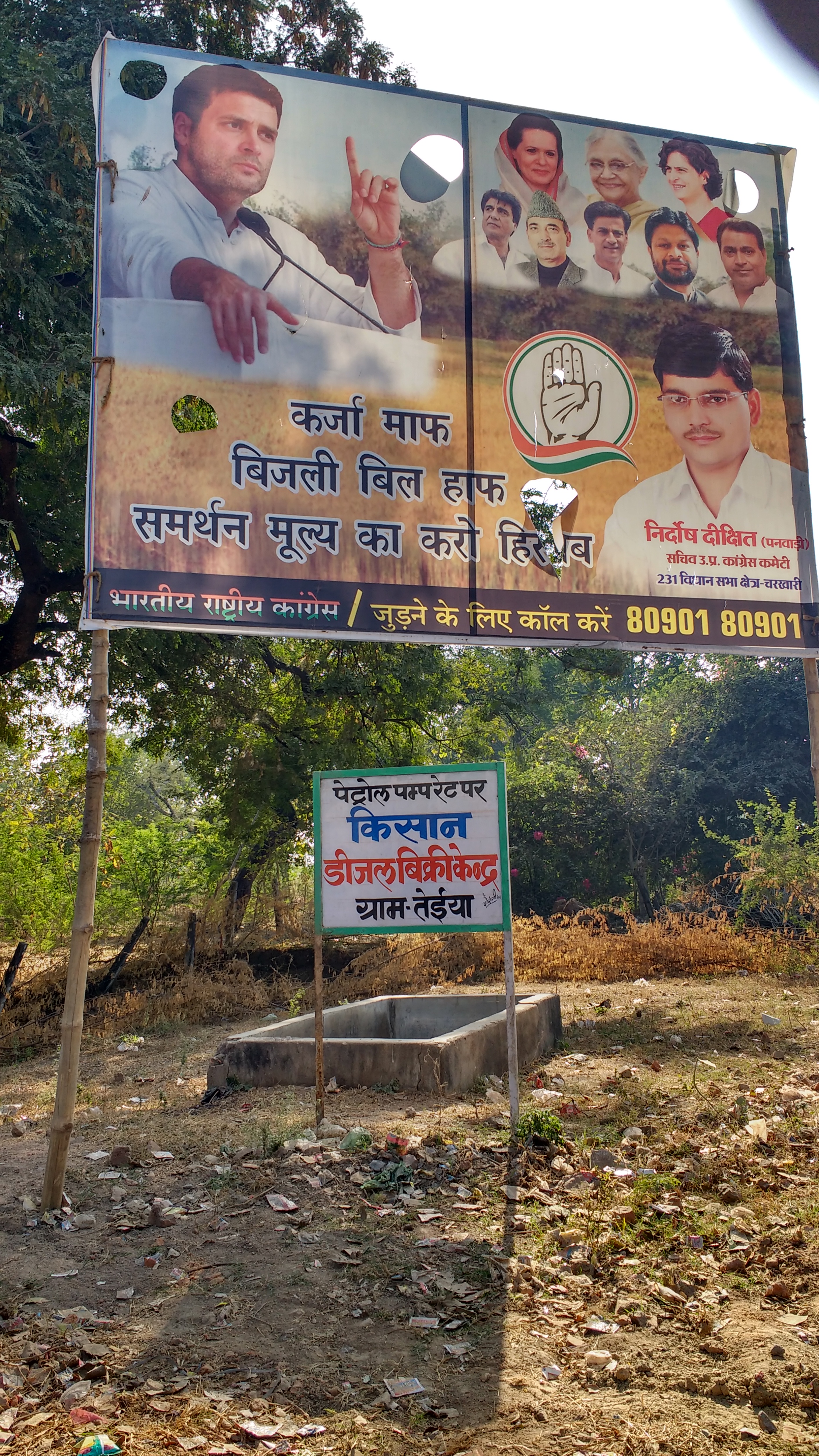
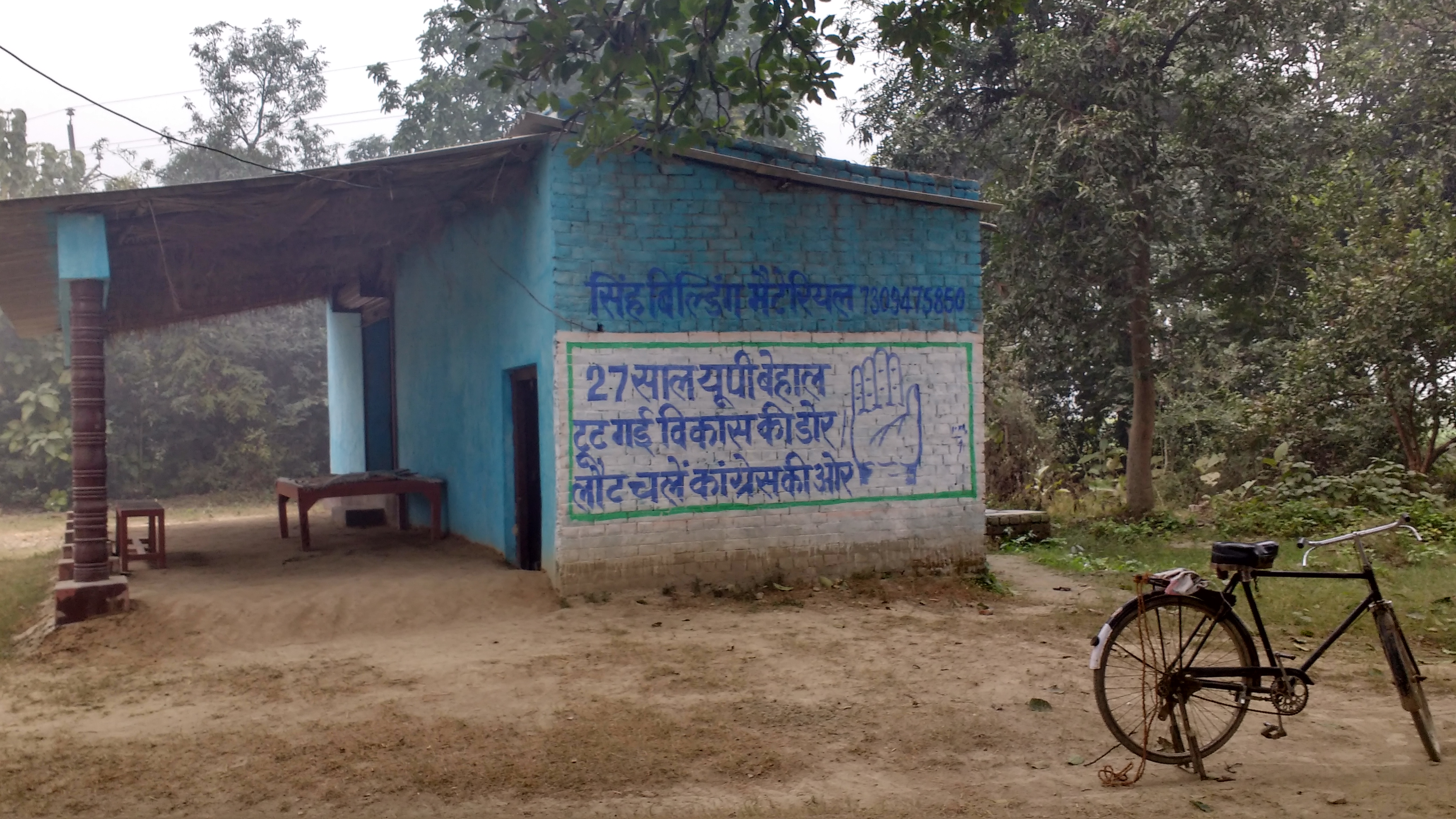
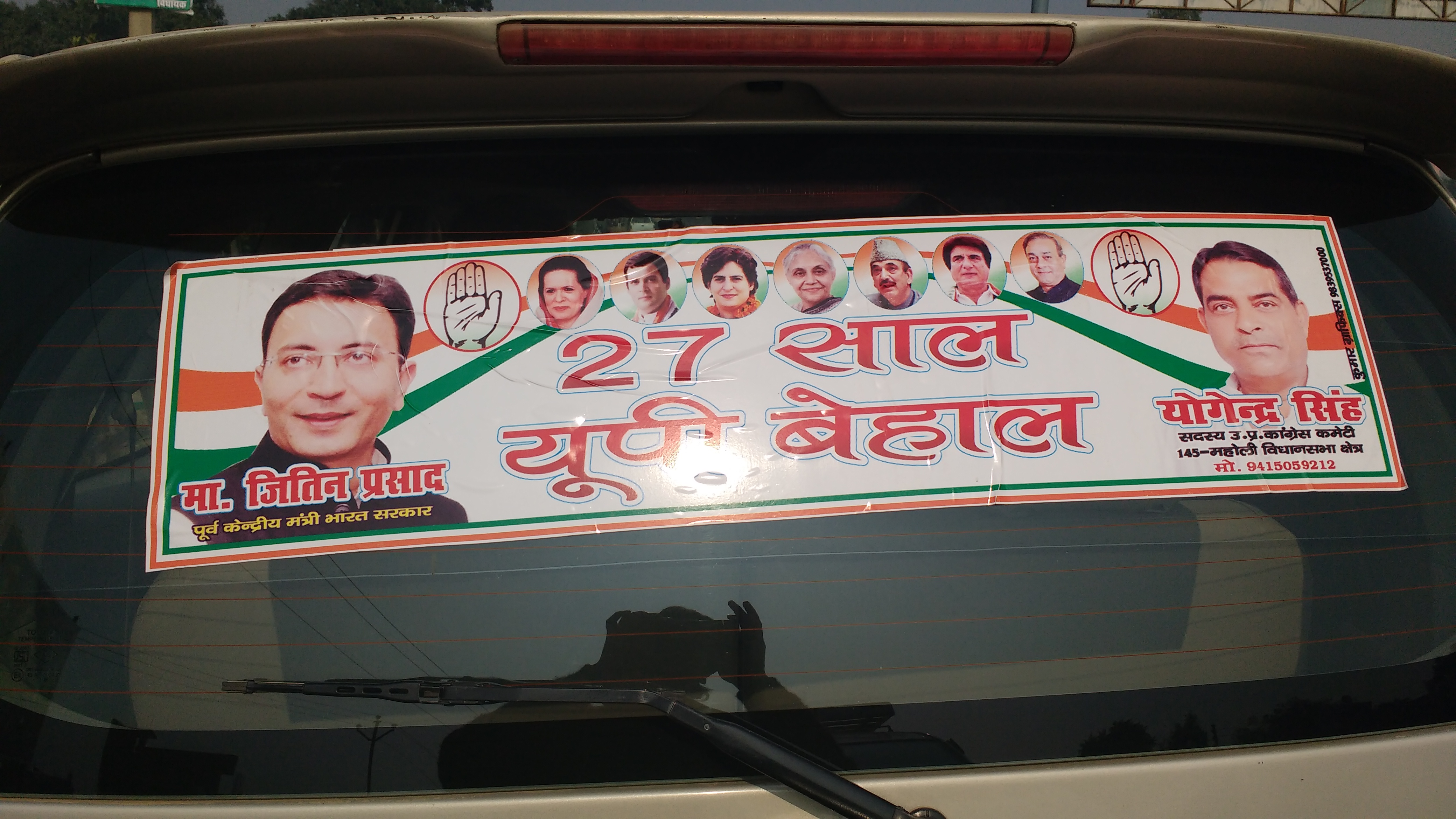
That is why, crowned with the successive credits of 2014 scripting victory for its clients, BJP in 2014 and Bihar Mahagathbandhan in 2015, the leading king of political marketing species, Prashant Kishore, presents a sorry face, as Congress successive announcements in the state seem to be a bundle of confusion. His approach of constituting a team of paid young professionals, coming from the institutional background of IIT, IIM and working with multinational corporations like McKinsey, Goldman Sachs, though excellent in data-analysis and focused planning, are found wanting in navigating the complex maze of political nuances, especially in complex scenario like UP.His political consultancy firm ‘India Political Action Committee (IPAC)’, started with a high pitch campaign of aggressively farmers issue by way of organizing ‘KhatRalley’ and ‘KisanYatra’ led by Rahul Gandhi. Realizing the prevailing agrarian distress and aloofness of BJP government at the centre on the issue, the party was advised to tap on the crisis of this occupational category by organizing measures like, ‘KisanMang Patra’, wherein the party subsequently claimed to have received the demands of more than one crore farmers in the state. To give the agenda a tangible presence, the big glittering banners of Congress with the slogan, “KarzaMaaf, Bijli Bill Half, SamarthanMoolyakaKaroHisaab” (The loan would be waived, electricity bill would be halved and the Minimum Support Price would be increased). Further, to highlight the overall distress prevailing in the state in general and farmers in particular, the party gave another slogan, “27 Saal U.P Behaal” (UP is in chaos since 27 years when Congress lost power in the state).
However, all these well-articulated strategies doesn’t seem to cut ice on the ground.How could a party that has projected its Chief Ministerial candidate long ago, who has taken a state wide tour, had made farmers’ issue its chief electoral plank, suddenly seems desperate to play second fiddle to any non-BJP party by being their junior partner, thereby abandoning its C.M prospect as well as chief electoral plank? In fact, the absurdity of technocratic class acquiring the cenrestage in political strategization, based on their ‘MBA-ised’ marketing principles, lacking deeper sociological and cultural nuances concerning political dynamics and legacies, gets reflected in majority of the Congress posters disproportionately highlighting Rahul Gandhi while missing the image of Indira Gandhi- the last leader from Congress who still fares in the memory of majority of the voters in the state.
The obsession with serving their clients and top leaders by treating them as a market product to be converted into brands outshining the rivals via glittering ads and glossyadvertisements, more often than not, leads to a narrow and suffocating obsession with the present with blunderous omission of the past, like Atal Bihari Vajpayee and Indira Gandhi, missing from the BJP’s and Congress’ advertisements respectively.
Consequently, these hyper aggressive-cum-colossal political managements and electoral marketing may help respective parties acquiring objective ‘perception advantage’, wherein majority of the voters tend to assume and opine the contest being between the parties who happen to be most visible in the public spaces through their advertisements and yet subjectively, may end up voting for a party grossly underestimated in terms of campaign visibility. Here, lies the clue as to why majority of the election surveys, of late, are grossly off the mark in terms of their estimation.
In the case of Uttar Pradesh, BSP, it seems is rendered on the third position by majority of the electoral surveys, precisely on account of the erring method of treating the artificially constituted perceptions of respondents as their actual preference for the said party. The BSP which has a traditional refrain from the mainstream media, a fact reflected in party not appointing any official spokesman, is also seen competing on the social media wherein its updates and slogans are seen clumsy and old fashioned in comparison to the high pitch campaign of other parties.
The slogans like, “Kaho Dil Se, Behan Ji Fir Se” (Behan Ji Once Again), may seem dull vis a vis the aesthetically coined slogans of consultancy firm managed parties, but taking the slogans as representative of their edge would be a epistemic fallacy as the reality and societal wisdom, barring few exceptional contexts, are mostly understated.